
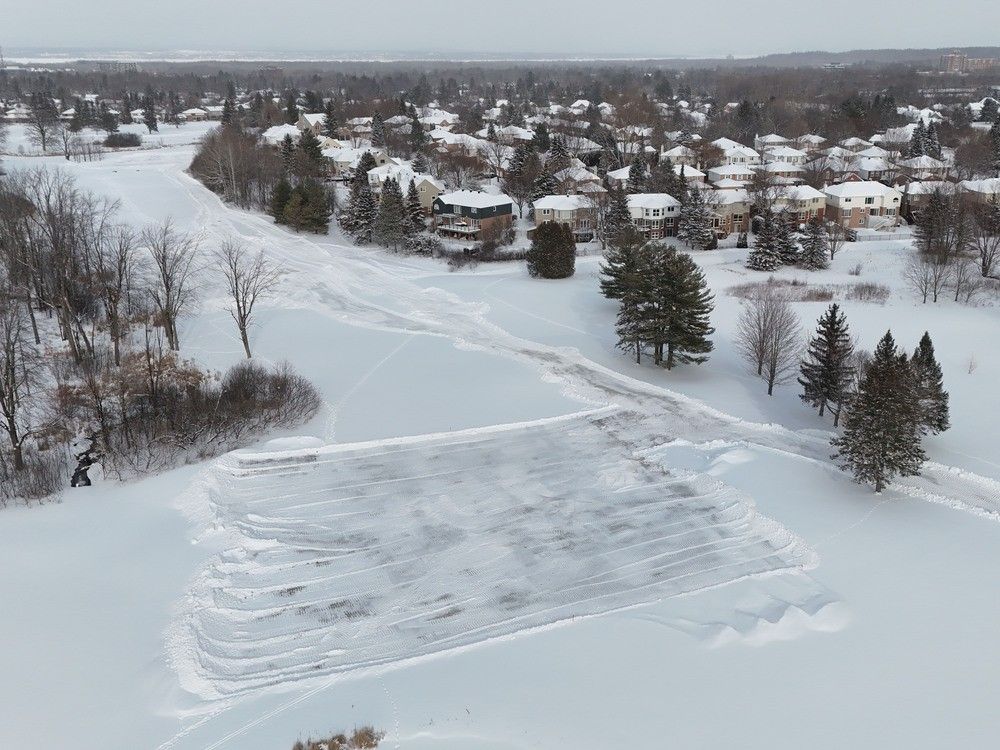
Councillors support motion to fight for Kanata golf course greenspace
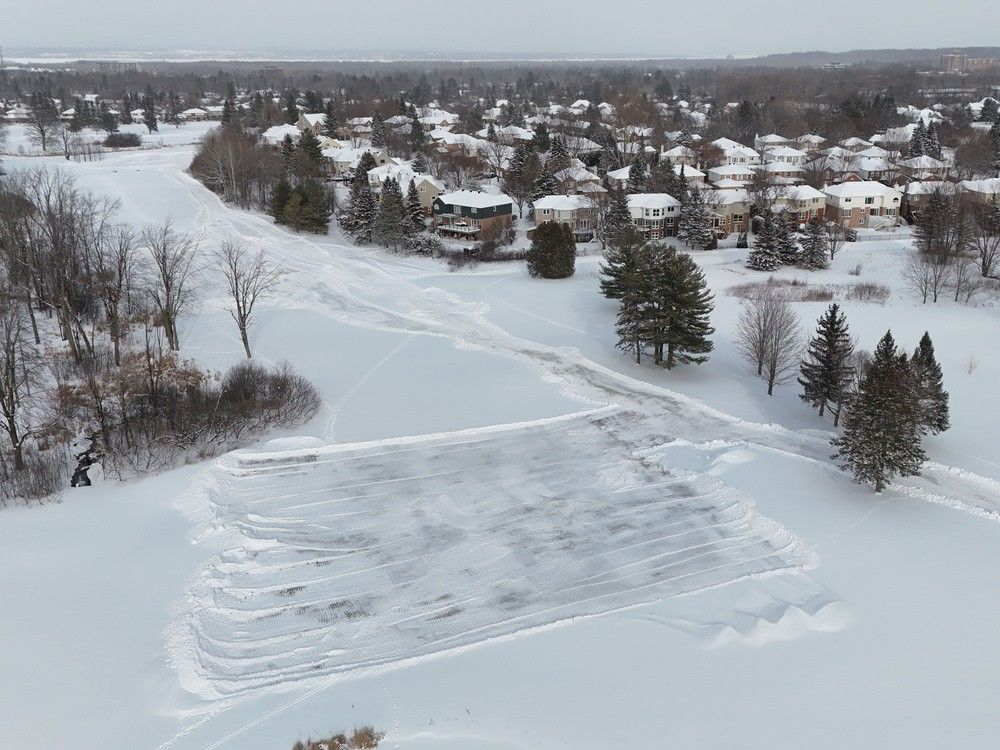
Ottawa city council has voted overwhelming in favour of using every tool it has in its toolbox to protect the Kanata Golf and Country Club greenspace.
Kanata North Coun. Cathy Curry and Stittsville Coun. Gower presented a motion Wednesday containing a number of resolutions that were supported by 22 councillors and Mayor Mark Sutcliffe.
The resolutions included one to “rigorously evaluate any application” for development using the city’s Official Plan, secondary plans and supporting planning evidence to “ensure that the public interest is protected” when planning recommendations are made for the land, which has been a target for redevelopment by its owner.
The motion also directed city staff to “explore and report back on lawful, voluntary options to secure long-term protection” of the land as open space. That included acquiring it, applying conservation easements or “any other arrangements deemed to be in the city’s interests.”
For example, the city holds a number of easements that were granted at the time the land was developed as a golf course. Developers could not build on the easements without city consent, councillors heard.
Curry said the greenspace not only served as a park for the public, but it also prevented mercury from being released into the environment and prevented flooding.
“If you are thinking of not supporting this, then you are OK with developing on public parks because that’s what would happen,” Curry told fellow councillors.
The issue dates back to 1981, when Campeau Corp. negotiated with the former City of Kanata to build the golf course. One of the conditions was that at least 40 per cent of the property would remain open space in perpetuity.
The “40-per-cent agreement” included a commitment to include the golf course lands in protecting natural space and allowed the city to take over that land for recreational activities if the owner no longer wanted to operate a golf course.
Kanata was amalgamated into the City of Ottawa in 2001. ClubLink purchased the property in 1997.
In 2018, ClubLink announced
, including about 1,500 housing units with development partners Richcraft Homes and Minto Communities while setting aside 32 per cent of the site for parks, woods and open spaces.
That proposal ignited a firestorm of controversy. So far, the City of Ottawa has spent more than $1.325 million fighting the matter in court.
In 2023, an Ontario Superior Court ruling determined that ClubLink
with a perpetual obligation” to operate a golf facility.
On Jan. 21, 2025, the Court of Appeal for Ontario
dismissed the City of Ottawa’s appeal
of that decision. The appeal panel of three judges said its decision was in keeping with a 2022 ruling by the Ontario Land Tribunal that suggested the ClubLink proposal represented good neighbourhood planning.
The court also decided that the original construction agreement for the land was no longer valid.
“All provisions in the 1981 agreement and related contracts relating to the golf course lands are to be considered void as a consequence,” the appeal court ruling said. “Where provisions relate to the property as a whole, they are to be interpreted as no longer applying to the golf course lands.”
In September 2025, the Supreme Court of Canada
denied the City of Ottawa leave to appeal
the provincial appeal court ruling.
ClubLink announced the final shutdown of golf course operations in late October.
On Tuesday, the Ontario Land Tribunal released a decision saying that all the prerequisites had been satisfied and both the zoning bylaw amendment and the draft plan of submission had been approved.
“We haven’t gone though it at staff level to really understand the implications,” Marcia Wallace, the city’s general manager of planning, told reporters after the council meeting.
In an interview, Curry said the Ontario Land Tribunal decision was a good thing, stipulating that 192 conditions about developing the land were still intact.
“Nothing has changed with those, and those are the conditions that allow the city not to have to allow easements, to have NCC approval, to have Mississippi Valley Conservation Authority approval. All the drainage approvals — which will include the Ministry of Fisheries and Oceans. All of the things we need to make sure that we preserve the greenspace are still intact,” Curry said.

Rideau-Vanier Coun. Stéphanie Plante, Capital Coun. Shawn Menard and Gloucester-Southgate Coun. Jessica Bradley opposed the motion.
City council is not a parallel legal authority to courts, Plante argued.
“Over the past several years, this issue has been litigated exhaustively. Not casually. Not partially, Exhaustively,” she said. “City council does not have the authority to undo binding judicial and tribunal decisions. We cannot will powers into existence by motion. A significant part of the anger we are seeing is from residents who believe we can undo binding judicial and tribunal decisions.”
Speaking to reporters after the council meeting, Sutcliffe said there were many different reasons why development could happen or not happen on a particular site.
The courts reviewed a historical agreement and determined that it was no long in effect, but there were other issues that could determine whether development would go ahead or not, Sutcliffe said.
“The community was built with the assumption that it would be greenspace,” he said. “I think we owe it to the community to explore all of the avenues to make sure that, before anything happens on that site, we’re exhausting every possible avenue.”

The Kanata Greenspace Protection Coalition had asked Sutcliffe for support to permanently protect the golf course lands.
“To be clear — our longstanding opposition to site development is not a NIMBY-based argument against densification or infill housing. Rather our position is rooted in protecting and ensuring the sustainability of the existing surrounding residential communities of Kanata Lakes and Beaverbrook as well as the Kanata North Tech Park,” the community group said in a letter to Sutcliffe.
“The current economic pressures to build residential housing quickly should not stifle effective governance or preclude the obligation to consider the merits of every development site in the context of its risks and benefits to existing residents and taxpayers.”
