Inuit artifacts repatriated from the Vatican find temporary home in Museum of History

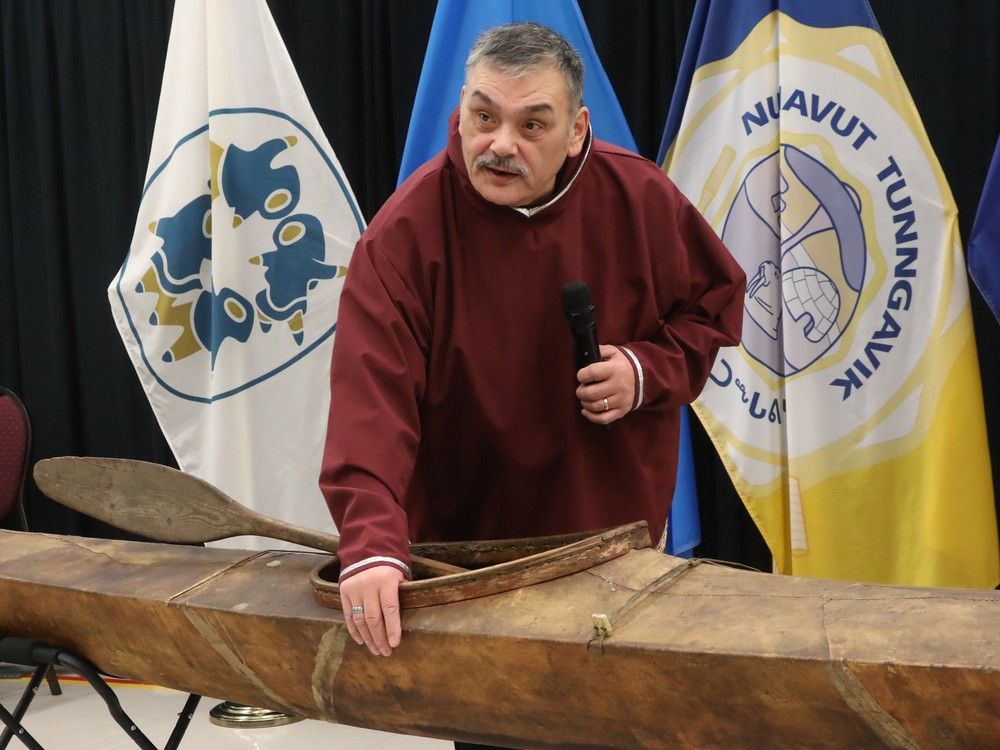
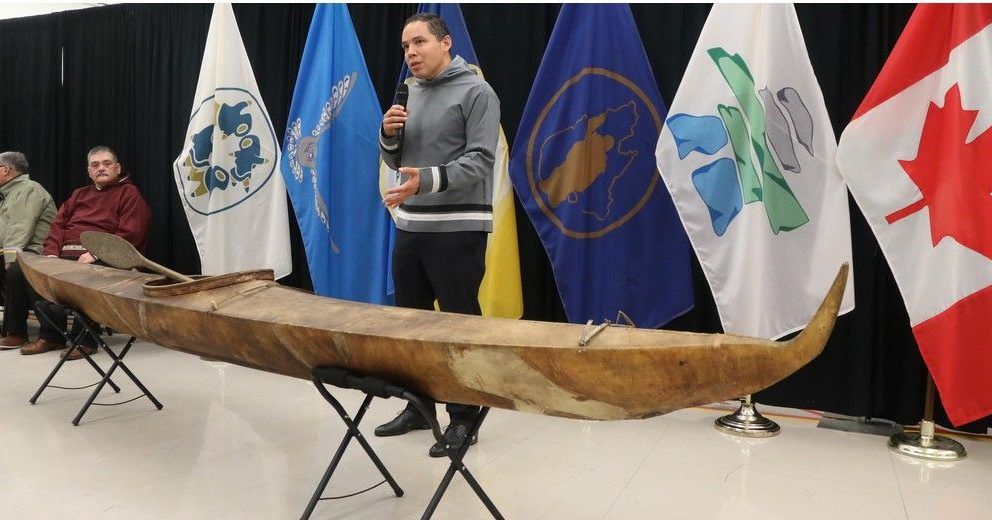
Darrel Nasogaluak, elder and chair of the Tuktoyaktuk Community Corporation, builds kayaks and also teaches students to construct them.
But this is the first time he has been able to touch a century-old kayak that has just
as part of a years-long repatriation effort of Indigenous leaders to
from the Vatican.
By the time Nasogaluak stood in front of the media Tuesday at the Canadian Museum of History, he had been able to inspect the kayak, and he shared what he had discovered.
“I feel privileged to be in the presence of one of my ancestors’ main hunting tools,” he said. “This is a Ferrari of kayaks.”
The kayak is the centrepiece of the repatriation effort for Inuit.
president Natan Obed said that it had been on display in the Vatican before returning closer to home.
Nasogaluak described the kayak and how it was constructed to media, detailing the mix of material, including seal skin, wood and caribou sinew. There were even teeth marks of his ancestor who built the kayak inside the seam of the canoe, an old technique to bend wood prior to contemporary tools.
“One of the things we use, because these were built out in our traditional villages, we didn’t have a vice, so we used what we had,” Nasogaluak said.
“So you grab willow ribs and crank it over and bend it, so we looked in the interior of this one, and you can see my ancestor’s tooth marks, just like we did when we work with the students at home.”
Other elements like the horns of the kayak on the front and back tip, a stylistic detail of the Inuvialuit region that sits at the northern parts of the Yukon and Northwest Territories. One horn on the back tip of the kayak, however, is lost.
Obed also described the long road of repatriation, recalling that when the late pope Francis was leaving Nunavut during his Papal visit in 2022, he talked about the need for the repatriation of items.
“I will repeat what he said,” Obed added. “Thou shall not steal, and if items were taken forcefully or without consent, that is what it amounts to.”
Duane Smith, chair and CEO of the Inuvialuit Regional Corporation, said that the likely theory for how the kayak was found was that it was at a burial site. The ancestral way to funeralize in Inuit culture is to lay the person’s body, alongside all their tools, on the permafrost, he said.
The kayak being one of the most important hunting tools, it was likely that the kayak was left beside its owner in death before being found and sent to the Vatican, Smith added.
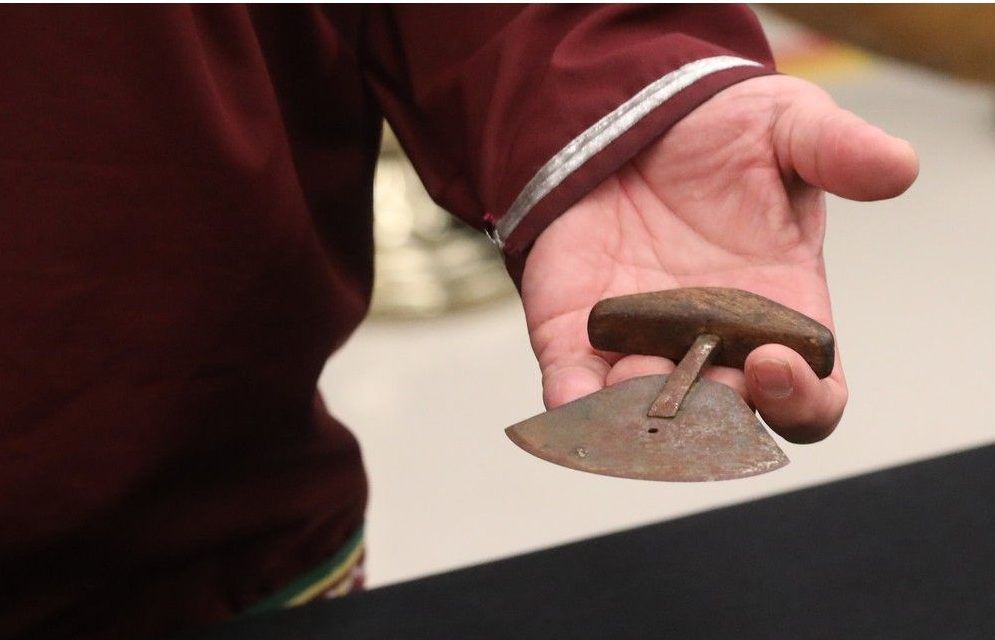
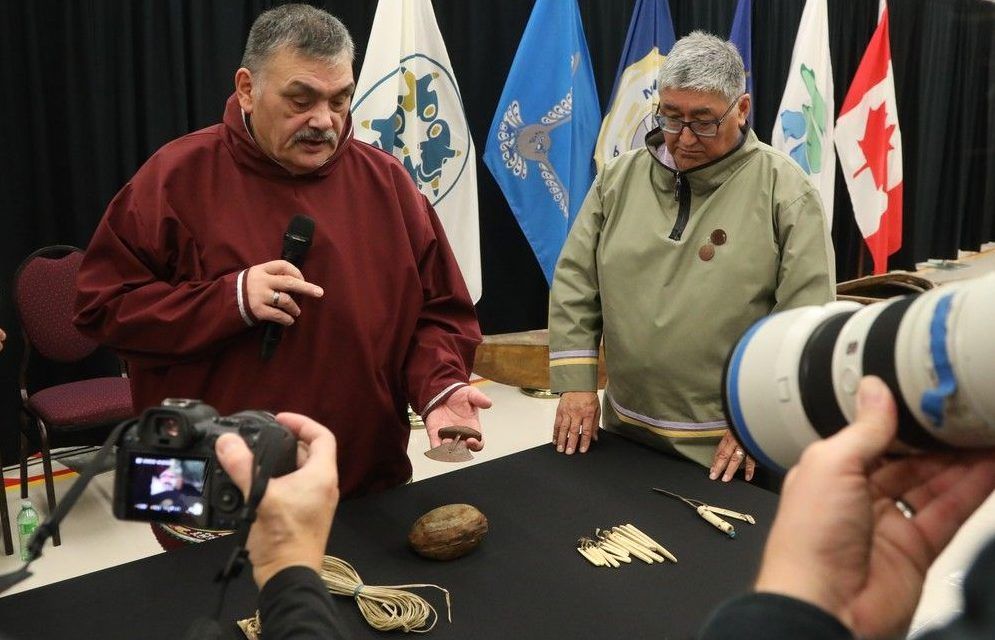
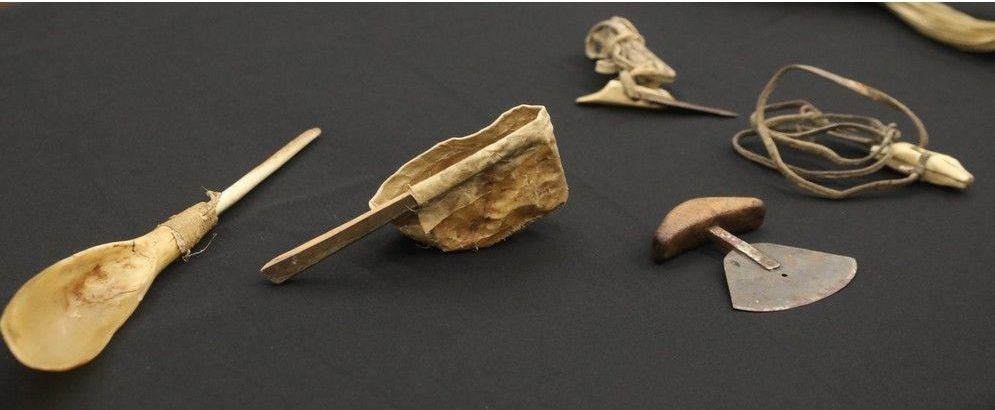
Other tools that were repatriated included a small ulu, a half-mooned knife, which was likely used for sewing rather than cooking or harvesting due to its smaller size.
Other tools include a rope made out of seal skin, a tip of a harpoon, a ladle and a water pouch, among others.
Caroline Dromaguet, CEO and president of the Museum of History, told the Ottawa Citizen the partnership with Indigenous leaders in the repatriation efforts was “historic.”
“It’s been such a wonderful and humbling opportunity to partner with our Indigenous partners and to support them in the way we could to make sure the belongings arrive safely,” Dromaguet said.
Dromaguet also described the repatriation as a “process”, part of an ongoing effort of reconciliation to “move forward in the right way.”
Museums across the world have begun grappling with the messy history of colonization and what it means for ongoing efforts to bring cultural items home.
The Museum of History itself has been working since the 1970s to return cultural material back to Indigenous communities across the country,
according to the museum’s website
.
The museum has also shared other custodial arrangement agreements “to ensure that decision making by Indigenous people over their cultural heritage is prioritized,” the website continues.
Access protocols are also still being developing, and Dromaguet said that each “Indigenous partner will develop their own access (protocol) and how it will be known to community; it really will be led by them.”
Dromaguet also added that the museum will help transport the artifacts once they have found a permanent home.
Adam van Koeverden, secretary of state for sport and a former sprint kayak Olympic medallist, was invited to the event by Obed.
He told the Ottawa Citizen the reaction of Inuit at the event was similar to “seeing the joy on young Inuit kids’ faces when they’ve taken their first strokes in a kayak.”
Koeverden has spent time in the North, kayaking with Obed.
“Truly connecting with the heritage of the kayak is something special, and something that I look forward to doing more and more of,” he said.
First Nation and Métis artifacts were also part of the 62 items repatriated from the Vatican. Those items have yet to be fully unveiled to the public.
Obed said the Vatican had set a precedent for all others in respect to repatriation of Indigenous artifacts.
Related
Our website is your destination for up-to-the-minute news, so make sure to bookmark our homepage and sign up for our newsletters so we can keep you informed.