
Judicial delays in Ottawa have reached a crisis point, lawyer says
Five years after COVID-19 public health measures created backlogs in the justice system, one Ottawa lawyer says judicial delays have reached a crisis point in the city.
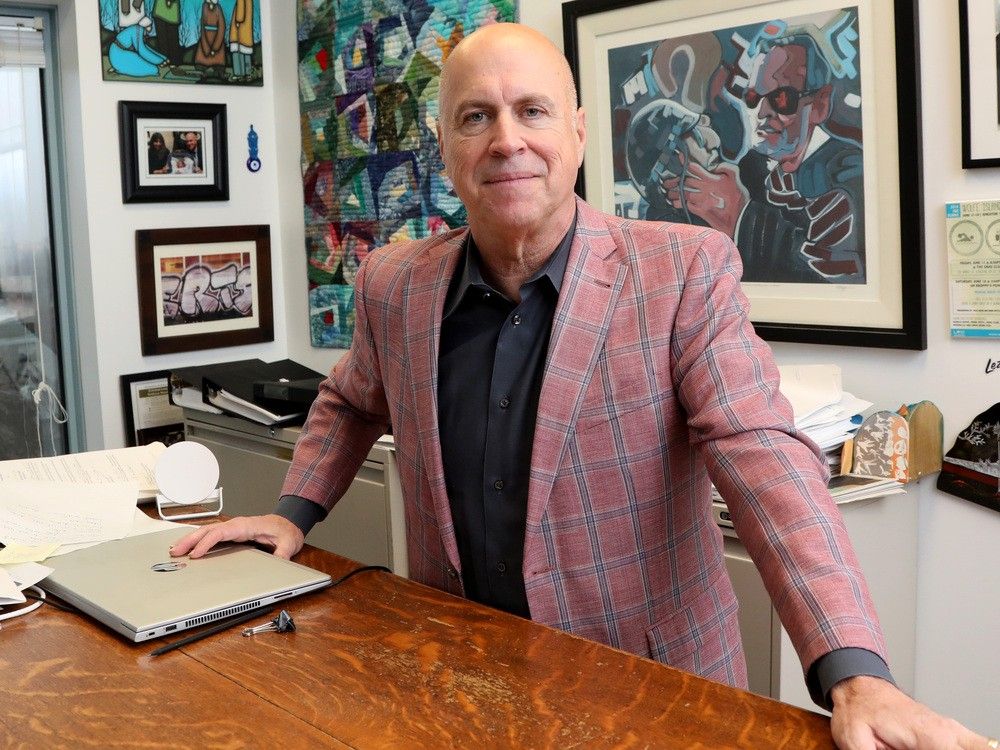
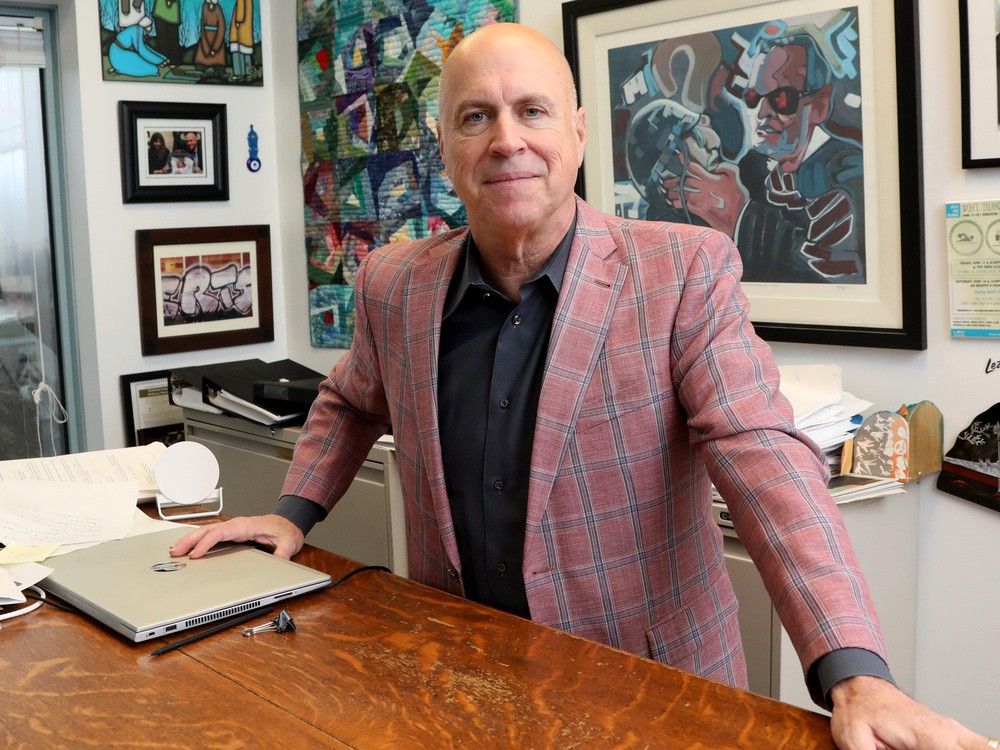
Mark Ertel, a local criminal defence lawyer who has been practising for 33 years, said delays have become institutionalized at the courthouse on Elgin Street.
, the Supreme Court of Canada stated that anyone charged with an offence has the right to be tried within a reasonable timeframe. The case also established numerical ceilings before a delay is considered unreasonable: 18 months for Ontario Court of Justice cases and 30 months for Superior Court of Justice cases.
If the delay exceeds the ceiling, the charges will be stayed unless the Crown can explain why the delays were necessary.
Ertel said
used to be rare. These days, however, it is very common to see criminal trial dates set close to the Jordan ceilings.
“That’s a lot of delay for somebody who’s probably waiting in jail without bail to have their trial,” Ertel told the Ottawa Citizen.
“Jordan ceilings were never supposed to be the goal of the justice system, but right away those Jordan ceilings became the new normal. … If there was really a presumption of innocence, and people really guarded the presumption of innocence with any kind of serious consideration for the accused’s rights, we should not have a system where people sit in jail for two years waiting for their trial to be held. You can’t give back two years of their lives.
“It’s going to reach a crisis point for sure. … There’s going to be a big reckoning coming soon.”
Ertel’s comments follow recent data from Statistics Canada, which shows the majority of criminal cases in Ontario ended in charges withdrawn, stayed, dismissed or discharged.
That number has also increased in the last decade.
According to the data, about 55 per cent of adult criminal court cases in the 2023-2024 period were stayed or withdrawn, a 13 percentage point jump since the 2013-2014 period, when Statistics Canada first started keeping track of such cases.
But Ontario does not track why these charges were withdrawn, stayed, dismissed or discharged, despite recommendations from the province’s auditor general to do so.
Ertel said the delays are a result of several factors.
Court staff like to “stack” court cases, where too many cases are assigned to one courtroom, he said. The Elgin Street courthouse isn’t big enough to accommodate all the cases that need to be heard.
This also means the courthouse does not have
, even though there is a judge shortage in the city, Ertel added. Some judges don’t even have offices or chambers to work in.
“They need some funding right away. In some cities, including Ottawa, they may need some type of plan to add courtrooms somewhere,” he noted.
“There are a lot of people who have offices in the Ottawa courthouse, including the Crown attorneys. It has never been explained to me why the Crown attorneys have a right to an office in the courthouse. But if the Crown attorneys moved somewhere else, they could probably add courtrooms, and then they’d be able to add judges, and maybe add chambers for the additional judges coming in.
“But, right now, it’s a deadlock.”
The criminal defence lawyer also said criminal cases have become increasingly more complex due to amendments to the Criminal Code made by federal politicians “who have never been to court.”
For example, sexual assault cases that used to take a few days to resolve now take a week or more.
This is due to Bill C-51, or colloquially called the “Ghomeshi Rules”, which reformed the admissibility of evidence in sexual assault cases. The bill prohibits lawyers from surprising complainants with their private records like text messages, emails or other communications that the complainant may possess during a trial. Defence lawyers who want to admit these private records as evidence must make a pre-trial application to the judge, and complainants are allowed to hire their own lawyers to be involved in the process.
The amendments were a direct result of the Jian Ghomeshi trial in 2016, when the defence lawyer surprised the complainant by using private communication records to cross-examine her sexual history. Then-minister of justice Jody Wilson-Raybould introduced Bill C-51 a year later in response to public outcry to expand “rape shield” provisions — laws that restrict the use of the complainant’s sexual history as evidence in a sexual assault trial.
“This has resulted in complicated pre-trial motions that just make scheduling even harder, so sexual assault trials that used to take a couple of days are taking a couple of weeks,” Ertel said.
“That puts a heavy burden on the system. It also puts a heavy burden on the judiciary, because it’s causing them to make several decisions in the same case instead of just deciding the case.”
Lastly, Ertel said complainants who don’t want to take part in the prosecution process often do not have a say in the matter by Crown attorneys. This means complainants are often forced to go through a trial they don’t want, and sometimes are subpoenaed to testify.
“Those trials with reluctant complainants are taking up a lot of court time, often resulting in acquittal and also resulting in longer and longer trials,” he noted.
“It’s just shocking to me. I don’t really understand why, in a country where we are supposed to be focusing on victims’ rights, we don’t give them any rights.
“The Crown attorneys should be more vigilant in separating the wheat from the chaff and getting rid of cases that are unlikely to result in a conviction. Crown attorneys are well aware they can’t prosecute all the cases they’re prosecuting because there isn’t enough time to prosecute them all, but they’re not doing anything about it.”
Delays are also affecting civil trials
Delays in criminal courts have also resulted in delays in civil trials.
Erin Durant, a lawyer at Borden Ladner Gervais LLP in Ottawa, said criminal cases and family cases involving children are often given priority over civil ones because of legislative, resource and funding issues.
She shared a case where a half-day hearing was delayed multiple times due to a lack of judges or resources, causing frustration for her and her client.
Durant then sent an email to courthouse staff, who were able to find them a judge to hear the case a few days later.
“Nobody even called us (at first). We didn’t have a judge, which is a lot of wasted time and energy. Then, for it to happen again for the same client, I was just beside myself,” Durant told the Ottawa Citizen.
Durant noted she discussed these issues with friends who work for the federal government, but was told it’s often a resource problem, not just a lack of judges. There may not be a courtroom available that day for a civil hearing, or the staff to take care of the courtroom if one is available.
But she wished there was a better way to track why a civil case was delayed.
“Instead of a vague message saying, ‘We regret to inform you that due to a lack of judicial resources, we cannot hear your matter next week, we will get you a new date. Sorry for the inconvenience,’ I wish they would say what the reason is,” Durant said.
“I just wish there were a way to track the reasons better. But I don’t think the court’s tracking it themselves, and they’re certainly not giving us explanations whenever things are happening.”
Durant said, however, the real root of the problem is prioritization of criminal court cases due to provisions in R v. Jordan.
“It’s only one court system with one finite pot of money. More and more money is being diverted to the criminal cases, and because we don’t have an equivalent of Jordan on the civil side, there are no repercussions for the court when they need to delay things for us,” she added.
“I think it will get to a (crisis point). I don’t know if we are there. I’m personally at a point where I don’t enjoy taking civil litigation cases anymore, because I just feel like once you take a case, it’s a never-ending adventure, and even getting to court and having a court date doesn’t mean your date is going to allow the case to end.
“The delays are to a point where it makes me question if I want to practise in this area, or whether I would get better results for my clients if I focus on things like mediations or out-of-court arbitrations, or other means of dispute resolution that don’t involve using our court system.”
Our website is your destination for up-to-the-minute news, so make sure to bookmark our homepage and sign up for our newsletters so we can keep you informed.
