Ottawa police budget greenlit by board, moves on to council for final approval
The Ottawa Police Service Board has approved a draft budget that would boost base funding for police operations to $414.9 million next year, and it will now be sent to council for final approval.
That’s
, or around five per cent.
The majority of the money will go towards compensation (85 per cent), and eight per cent will go towards materials, supplies and services. Four per cent of the budget will be allocated to the capital budget and debt, while another three per cent will be allocated to capital chargeback expenses like the radio system.
The draft operating budget does not include $5.4 million in one-time funding from the city’s tax stabilization reserve, to “offset pressures related to the delivery of strategic projects,” the OPS said. This includes the body-worn camera pilot and the district revitalization project.
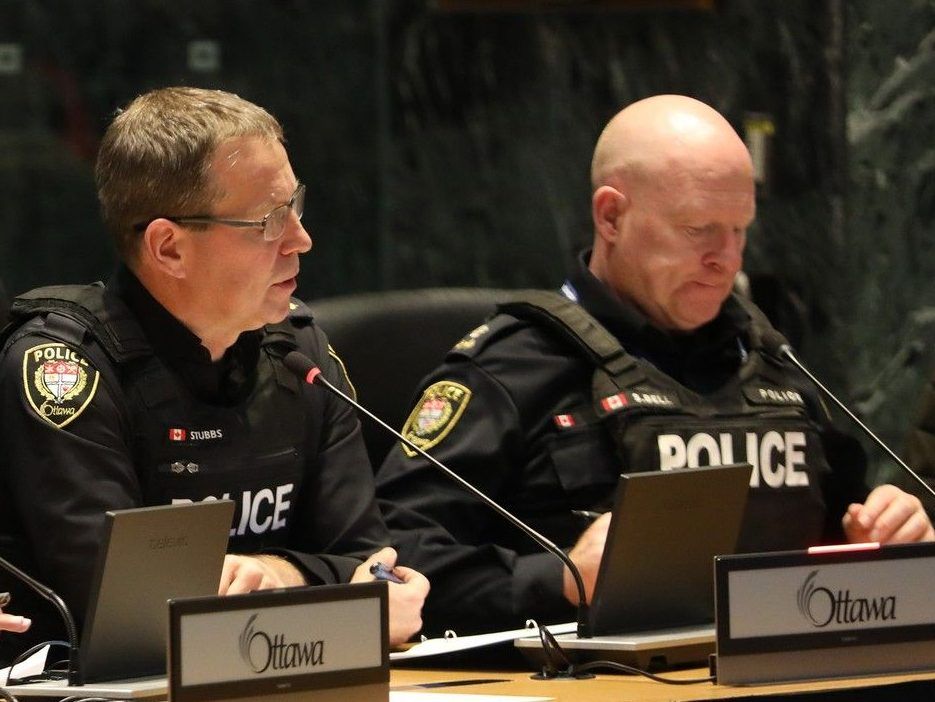
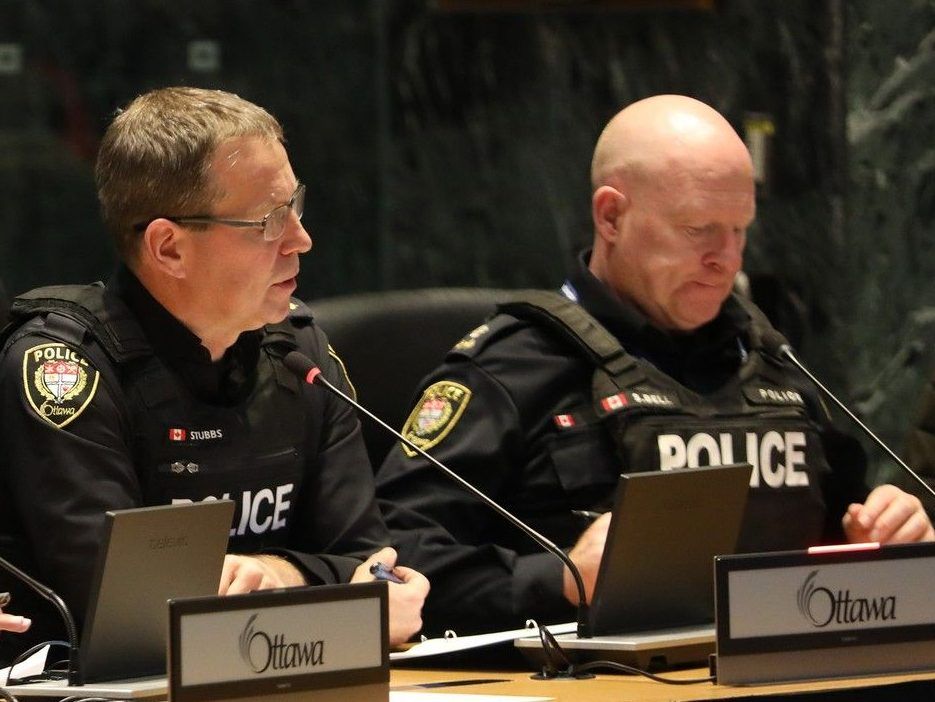
Chief Eric Stubbs said the draft operating budget reflects the operational realities facing the OPS, fiscal pressures affecting the City of Ottawa and the city’s evolving safety needs.
“We’re proud of the budget we’re putting forward. … We are near the end here. We’ve went through a lot to get to this point,” he told the Ottawa Police Service Board on Friday.
“The budget will help advance the board’s strategic priorities, and address other priorities and concerns identified through community and stakeholder feedback.”
The OPS’ draft budget aligns with the city’s draft budget, which includes a 3.75 per cent property tax hike if approved. This would add around $166 to the average household’s property tax bill next year.
Mayor Mark Sutcliffe said the 2026 budget is about “stability” and a “balanced approach” that would increase funding to police and emergency services, boost investments in public transit and provide funding for youth homelessness initiatives.
Previously, a budget directions report published in August recommended an increase of up to 6.5 per cent, the largest increase the OPS would have seen in the last 15 years.
The approval of the OPS draft 2026 operating budget also came after Sutcliffe announced increased investments in public safety on Thursday, which included $1 million for a two-year pilot project to
hire private security guards to enhance security in the ByWard Market.
The funding is part of Sutcliffe’s public safety plan, and many of the investments were previously announced as part of the city’s draft budget.
The mayor said the guards will “fill some of the gaps in service hours and at key locations in the Market,” and address concerns from the tourism industry and the small business community regarding open-air drug use and rising low-level crime.
“The OPS continues to be committed to seek ways to reduce operating costs while achieving its core objectives and delivering on the board’s strategic plan to achieve that balance,” said OPS Deputy Chief Steve Bell at Friday’s board meeting.
Mixed responses to police budget
Some Ottawa Police Service Board members, however, don’t think the OPS is spending enough.
Kanata North Coun. Cathy Curry, who is also a member of the board, said that if it were up to her, the OPS would receive more funding.
“I have a lot of concerns, obviously, about our police budget. I don’t think it’s high enough,” Curry said at Friday’s meeting.
Riverside South-Findlay Creek Coun. Steve Desroches, another council representative on the Ottawa Police Service Board, said he approves of the budget, especially the expansion of the body-worn camera project.
“Communities across Ottawa have consistently identified public safety as a top priority, and a well-resourced police service is essential to meeting that expectation,” he said at Friday’s meeting.
“Our police service remains the only 24/7 response available in the entire city for urgent situations. … Cutting police funding would limit the ability to respond to emergencies, increase response times and reduce neighbourhood patrols that residents consistently expect.
“Modern crime continues to grow in complexity. … The issue is not defunding the police but investing more wisely with targeted improvements and training, technology, smarter deployment of resources and problem-solving approaches.”
But activists in Ottawa have
repeatedly criticized the proposed increases to the police budget.
Sam Hersh of Horizon Ottawa told the Ottawa Police Service Board on Nov. 21 that the money would be better spent on community response programs for mental health calls, as well as Black and Indigenous communities.
He pointed to the success of the Alternate Neighbourhood Crisis Response (ANCHOR) program, which handles mental health crisis calls that would have otherwise been directed to police.
Hersh said the program shows that it is possible to focus on non-police responses to mental health calls, especially when mental health calls make up a significant portion of police responses.
“This is why the $26-million increase shouldn’t be approved, and why some funding from that increase should be redirected toward real alternatives,” Hersh told the board on Nov. 21.
“The police budget frames mental health calls as a major driver of workload and therefore uses them to justify increased spending.”
Robin Browne from 613-819 Black Hub also called the increase a “double standard,” especially at a time when Sutcliffe is calling for an “austerity budget.”
“Most of this increase is to pay for salary increases, and their own data continues to show that they continue to use force disproportionately on Black and Middle Eastern people,” Browne said at the Nov. 21 meeting.
— With files from Aedan Helmer
Related
Our website is your destination for up-to-the-minute news, so make sure to bookmark our homepage and sign up for our newsletters so we can keep you informed.